
01
Application engineering
Backend services, APIs and domain logic written to be read, tested and changed by people who did not write the original version.
Information technology · Engineering
STEP AHEAD SOURCING LTD is an information technology company. We design, build and operate software systems — applications, web platforms, cloud environments and the integrations between them — with an engineering approach that values clarity, documentation and long service life over short-term speed.

Company overview
STEP AHEAD SOURCING LTD works on the technical side of software: writing it, connecting it, running it and keeping it understandable. The company operates in English and is reachable by email at claudiealley475@gmail.com. Information about the company is published at stepaheadsource.com.
The work is organised around a simple position. Most of the cost of software is not in writing the first version; it is in everything that comes afterwards — the changes, the incidents, the migrations and the handovers. Decisions are therefore made with the second, third and fourth year of a system in mind.
In practice this means readable code over clever code, boring and well-documented technology over novelty, explicit contracts between systems, tests where they protect something that matters, and written records of why a design was chosen. None of it is exotic. It is simply applied consistently.
Core technology capabilities
01
Backend services, APIs and domain logic written to be read, tested and changed by people who did not write the original version.
02
Responsive, accessible interfaces for browsers, built on component systems with predictable state and clear data flow.
03
Relational schema design, migrations, indexing and query work that keeps performance stable as data volume grows.
04
Repeatable environments, deployment pipelines, configuration management, observability and cost-aware resource sizing.
05
Connecting systems that were never designed to talk to each other, with explicit contracts and predictable failure handling.
06
Replacing repeated manual steps with scheduled and event-driven processes that log what they did and why.
Software engineering
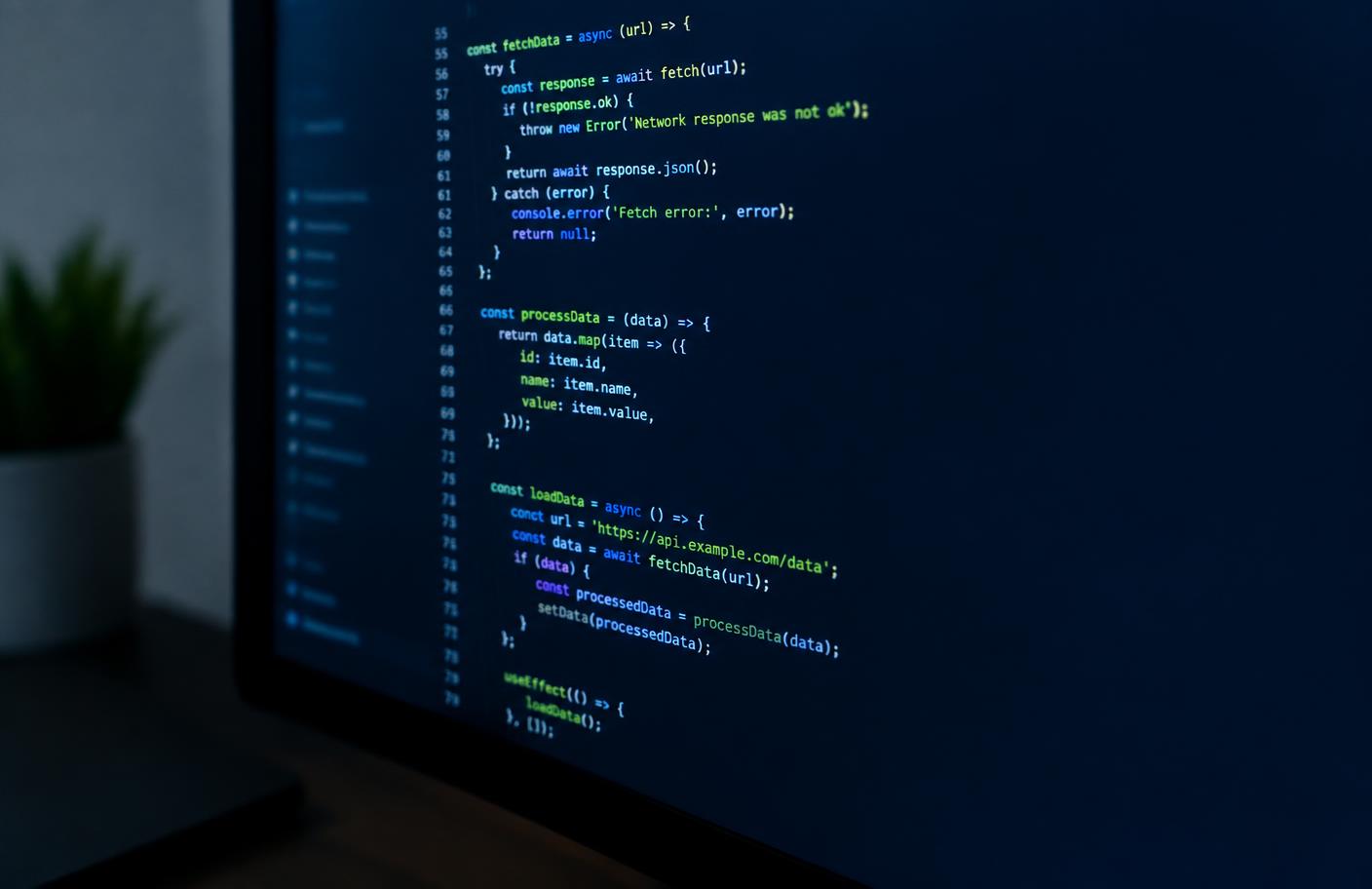
Software engineering work covers backend services, domain logic, APIs, scheduled processing, data access layers and the internal tooling that supports them. The starting point is always the behaviour the system must guarantee, not the framework it will be written in.
Implementation is delivered in increments that can be reviewed and deployed independently. Each increment carries its tests, its migration scripts where relevant, and a short written note explaining the decision behind it.
Deliverables include source code in your repository, automated tests, configuration for each environment, and documentation describing how the component is built, run, monitored and extended.
Web application development
Interfaces are assembled from a shared component library with consistent spacing, typography and colour, so that a new screen looks and behaves like the rest of the product without re-inventing it.
Layouts are designed for narrow screens first and expanded outward, so that phone, tablet and desktop are variations of one design rather than three separate implementations.
Semantic markup, meaningful heading order, readable contrast, descriptive alternative text for images and respect for reduced-motion preferences are treated as requirements, not refinements.
Image sizing, lazy loading below the fold, controlled font loading and restrained JavaScript keep pages fast and prevent layout from shifting while content arrives.
Cloud and infrastructure
An environment that exists only on a machine somebody configured by hand is a risk. Infrastructure work here focuses on describing environments as code, so that staging and production can be created, compared and recreated deliberately.
That includes deployment pipelines, configuration and secret handling, backup and restore procedures that have actually been tested, logging and metrics that answer real operational questions, and resource sizing that is reviewed against cost rather than left at defaults.
Migrations from manually managed servers to managed services are rehearsed in a non-production environment before production is touched, with a documented path back.
Systems integration and automation
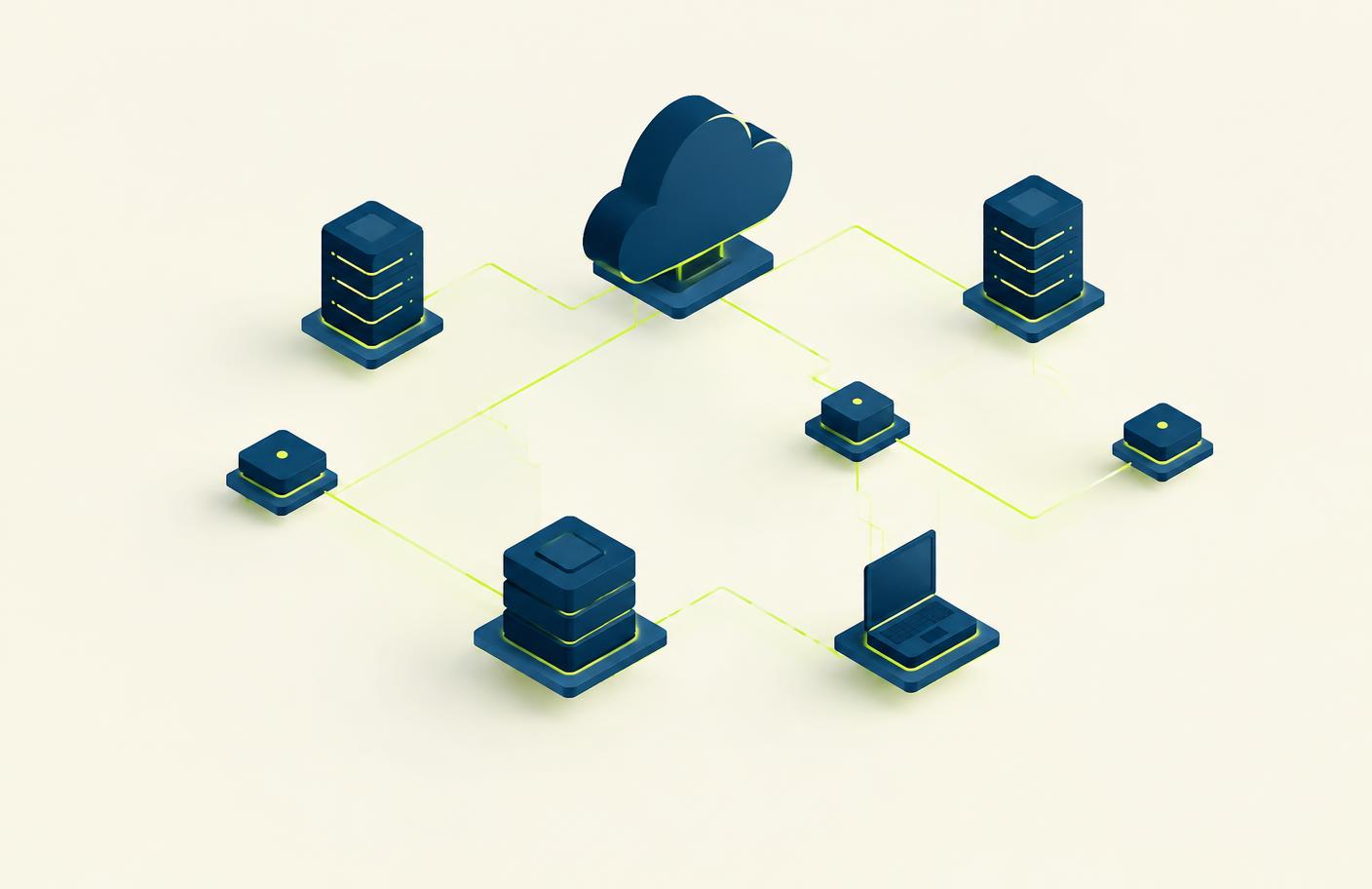
Integration is where most operational surprises originate, because it is the place where assumptions from two different systems meet. The work is therefore explicit about contracts, ordering, duplication and failure.
Every interface between systems has a documented shape, a documented set of error responses and a documented owner. Nothing depends on an undocumented field that happened to be present.
Messages and jobs are designed so that processing the same item twice is harmless. Retries then become a safe default rather than a source of duplicated records.
When a transfer fails, the system records what failed, with which payload, at what time, and what will happen next. Silent failure is treated as a defect.
Scheduled and event-driven automation replaces repeated manual steps, and every run leaves a record of what it changed so results can be reconstructed later.
Quality assurance and testing
A test suite is an asset only if it fails for good reasons and passes for good reasons. Coverage targets on their own encourage tests that assert very little.
Fast tests around domain rules, calculations and edge cases, written where the logic is genuinely non-trivial.
Tests that exercise real database access, real serialisation and real boundaries between components, catching the mistakes unit tests cannot see.
A small, deliberately selected set of flows that must never break, exercised through the interface the user actually uses.
Before a release, previously reported defects are re-checked and performance is sanity-tested against a known baseline.
Exploratory testing of new behaviour by someone who did not implement it, because unfamiliar hands find different problems.
Security-conscious development
These are development practices applied during delivery. They are described here as working methods and are not presented as a certification, accreditation or guarantee of compliance with any particular standard.
Accounts, services and tokens receive the narrowest access that allows them to do their job, and that access is reviewed when responsibilities change.
Data arriving from outside the system is validated at the boundary, and queries and templates are constructed so that untrusted input cannot change their structure.
Credentials are kept out of source control and out of logs, injected through environment configuration, and rotated when people or systems change.
Third-party dependencies are kept current and reviewed for known advisories, because unmaintained libraries are a common route into otherwise careful systems.
Systems are designed to collect and retain the data they actually need, which reduces both risk and the work required to honour deletion requests.
Changes touching authentication, authorisation, payments or personal data receive a second pair of eyes before they reach production.
Delivery process
Stage 1
We collect the problem statement, current constraints, existing systems and the outcome you expect. The result is a written scope with explicit assumptions and open questions.
Stage 2
Architecture, data model, integration points and non-functional requirements are described before implementation starts, at a level of detail that fits the size of the work.
Stage 3
Work is delivered in reviewable increments. Each increment is demonstrable, covered by tests where meaningful, and deployed to an environment you can inspect.
Stage 4
Functional testing, regression checks, performance sanity passes and review of security-relevant behaviour before anything is proposed for release.
Stage 5
Deployment, documentation, runbooks and a walkthrough of how the system is operated, monitored and extended by your own team.
Collaboration and communication
Decisions, assumptions and open questions are written down, because written records survive holidays, staff changes and the gap between one project phase and the next. Conversations are used to reach a decision quickly; the outcome is then recorded.
Progress is shared as working increments rather than status percentages. If something is blocked, late, or turning out differently than planned, it is raised when it becomes apparent, not at the end of a phase.
We work in English, adapt to the tools your team already uses for issue tracking and code review, and expect to be questioned about technical choices — a decision that cannot be explained in plain language is usually not a good decision.

Illustrative project scenarios
The scenarios below are written illustrations of typical engagements. They are examples only. They do not describe completed client work, and they do not reference any actual customer, product or organisation.
Illustrative example
A company tracks operational data in shared spreadsheets. An internal web application is built with a relational database, role-based access, validation rules and an export path, so that the original spreadsheets can be retired gradually rather than in a single cut-over.
Illustrative example
An order system and an accounting system hold overlapping records. An integration service is introduced with an explicit mapping, idempotent processing, retry behaviour and a log that shows exactly which records were synchronised and when.
Illustrative example
An application was extended by several teams over several years. Work begins with characterisation tests and a dependency map, then targeted refactoring of the modules that change most often, keeping the system releasable throughout.
Illustrative example
A service runs on a manually configured server. The environment is described as code, deployment is automated, logging and metrics are added, and the migration is rehearsed in a staging environment before production is touched.
Frequently asked questions
All answers are shown in full. Nothing on this page is hidden behind a control.
Contact information
All details are shown as plain text. This website contains no forms, buttons or clickable contact details.
Email is the channel for enquiries. A message that describes the problem, the systems already involved, the constraints you are working within and the timescale you have in mind allows a useful answer to be prepared straight away. No telephone number, postal address or response-time commitment is published.